
Construction
Construction Cost Index 2026: What It Is, and How It Affects Your Project Budget

Jan
Construction costs rarely stay still. Prices rise, pause, then rise again. In 2026, this pattern continues with new pressure points. Labor remains hard to replace. Materials move in cycles. Fuel and transport costs still shift without warning. These changes affect every construction project, large or small.
Many projects now run on tight margins. Even small cost changes can disrupt a plan. A late price increase can force design cuts or schedule delays. This makes cost awareness essential from day one.
The Construction Cost Index offers a clear way to track these changes. It shows how building costs move over time. It does not guess. It reflects real market data. When used early, it helps teams plan with confidence.
In 2026, the index matters more than before. Global supply chains remain fragile. Local labor markets stay uneven. Regulations continue to evolve. Together, these forces make cost planning harder.
Understanding the Construction Cost Index helps reduce risk. It supports better budgets and smarter timing. It also creates transparency between owners, designers, and contractors. In a year shaped by uncertainty, this index remains one of the most reliable planning tools available.
What Is the Construction Cost Index?
The Construction Cost Index, or CCI, tracks changes in building costs over time. It measures prices for labor, materials, and equipment. Some versions also include overhead and profit.
The index does not show exact project costs. It shows trends. These trends help compare costs from one time to another.
In 2026, the CCI reflects steady pressure on the industry. Material prices remain uneven. Skilled labor stays in short supply. Energy costs still affect production and transport.
How Is the Construction Cost Index Calculated for Different Cities?
The Construction Cost Index changes from city to city. Local conditions shape how the index is calculated. A national average cannot reflect these differences. Each city has its own cost drivers.
Labor rates form the base of most city indexes. Wages differ by region. Union presence also affects pay scales. Cities with labor shortages report higher rates. Training and overtime costs may also apply.
Material prices vary by location. Some cities sit near factories or ports. Others rely on long distance transport. Freight costs raise local prices. Taxes and fees also affect material cost.
Availability matters as much as price. A material that is common in one city may be scarce in another. Scarcity pushes prices up. The index captures these shifts through regular price checks.
Equipment costs also differ. Urban sites often require smaller or specialized machines. Rental rates increase in dense areas. Fuel prices also change by region.
Most city indexes use a fixed basket of inputs. This basket includes labor hours, material quantities, and equipment use. Each item carries a weight based on local use. The total cost is compared to a base year.
Data collection happens often. Some cities update monthly. Others update quarterly. Local contractors, suppliers, and trade groups provide pricing data.
The result shows how construction costs move within that city. It allows fair comparison over time. It also helps adjust budgets for local conditions.
Using a city specific index improves accuracy. It reflects real market pressure. This makes planning more reliable for any local project.
Why the Construction Cost Index is Important
Construction projects take time. Costs rarely stay the same from start to finish. The index helps predict where prices may go.
Owners use it to set budgets. Contractors use it to price bids. Lenders use it to judge risk.
Without the index, planning becomes guesswork. With it, teams can make informed decisions.
Key Factors Affecting Construction Costs in 2026
Construction costs in 2026 are shaped by several clear forces. These factors affect every stage of a project. They influence budgets, schedules, and final outcomes. Understanding them helps teams plan with fewer surprises.
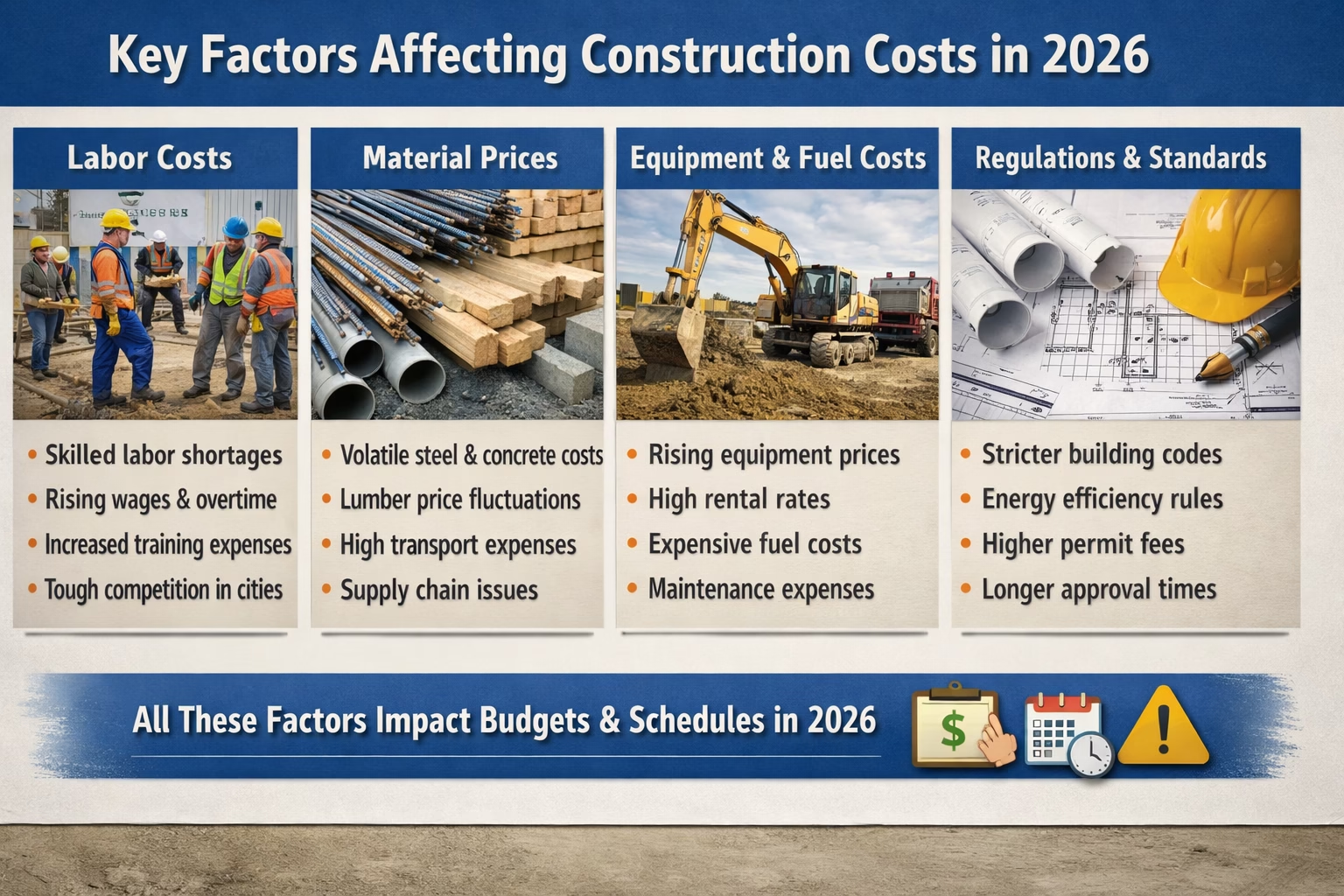
Labor Costs
Labor remains one of the biggest cost drivers in 2026. Skilled workers are still hard to find. Many experienced workers left the industry in recent years. Fewer new workers replaced them.
Wages continue to rise across most regions. Contractors must pay more to attract and keep crews. Overtime is common on busy sites. This pushes costs higher.
Training also adds expense. New workers need time to gain skills. Safety training requirements increased in many areas. These costs are now built into labor rates.
Labor availability varies by city. Large metro areas face strong competition for workers. Smaller markets struggle with limited labor pools. Both situations raise costs.
Material Prices
Material prices remain uneven in 2026. Some materials stabilized after past spikes. Others continue to fluctuate.
Steel prices shift with global demand. Concrete costs rose due to energy use in production. Lumber prices settled but still react to supply changes.
Transport plays a major role. Fuel prices affect delivery costs. Longer routes mean higher material prices. Delays also increase storage and handling costs.
Local supply matters. Cities near ports or plants often pay less. Remote areas pay more due to freight and limited options.
Equipment and Fuel Costs
Equipment costs continue to climb. Purchase prices rose as manufacturing costs increased. Many firms now rent instead of buying.
Rental demand stays high. This pushes rental rates upward. Specialized equipment costs even more.
Fuel remains unpredictable. Price swings affect daily operations. Higher fuel costs increase hauling and machine use expenses.
Maintenance costs also grew. Parts and service take longer and cost more.
Regulations and Standards
Regulations continue to affect construction costs in 2026. Building codes change to improve safety and efficiency.
Energy standards became stricter in many regions. Projects now require better insulation and systems. These upgrades raise upfront costs.
Permit fees increased in some cities. Approval timelines also lengthened. Delays add indirect costs to projects.
Compliance requires more documentation. This adds time and administrative expense.
These factors work together. Labor, materials, equipment, and rules all influence final cost. Tracking them helps teams make smarter decisions.
How the Construction Cost Index Is Calculated
The Construction Cost Index is built using a clear and repeatable process. It focuses on tracking cost changes, not predicting future prices. Each step aims to reflect real market conditions.
The process starts with selecting a group of common construction inputs. These inputs represent typical work on a standard project. They usually include labor, materials, and equipment. The list stays consistent to allow fair comparison over time.
Labor costs are measured first. This includes hourly wages for key trades. Benefits and payroll taxes are often included. Overtime rates may also be counted. These figures come from local contractors and labor groups.
Material prices are gathered next. Common items such as concrete, steel, and lumber are tracked. Suppliers provide current prices at regular intervals. Delivery and handling costs may be included.
Equipment costs are also measured. This includes rental rates for common machines. Fuel and basic maintenance may be part of the calculation. Urban and rural rates are tracked separately when needed.
Each input receives a weight. The weight reflects how much it affects total construction cost. Labor often carries the largest weight. Materials usually follow. Equipment has a smaller but important share.
All current costs are compared to a base year. The base year is set to a value of 100. Any change shows how much costs increased or decreased since that year.
Updates happen on a set schedule. Some indexes update monthly. Others update quarterly. Regular updates keep the index relevant.
The final index number shows cost movement over time. It helps compare past and present costs. This makes it a useful planning tool for any project.

Common Construction Cost Indexes Used Today
Several construction cost indexes are widely used in 2026. Each index serves a different purpose. Some focus on national trends. Others reflect local market conditions. Choosing the right one improves cost accuracy.
The ENR Construction Cost Index is one of the most recognized. It tracks labor and material prices using a fixed group of inputs. These inputs represent common construction work. The index updates often and shows long term trends. Many planners use it for early budgeting.
The ENR Building Cost Index is another common option. It measures similar data but uses different weights. Labor has a higher impact in this index. It is often used for building projects instead of heavy civil work.
Regional construction cost indexes are also important. These indexes focus on specific cities or states. They reflect local wages, material prices, and rental rates. Regional data helps adjust national trends to local conditions.
Producer price indexes also support cost tracking. They measure price changes at the manufacturing level. These indexes help explain material cost shifts before they reach job sites.
Some firms use custom indexes. These are built from internal project data. They reflect real costs from past work. This approach improves accuracy but requires strong data systems.
No single index fits every project. Many teams compare several indexes. This gives a clearer picture of market movement. Using the right index helps set realistic budgets and expectations.
How the Index Affects Project Planning
The Construction Cost Index plays a major role in shaping every part of project planning. It gives teams real insight into costs. Using the index helps avoid surprises, plan smarter, and stay within budget.
Budget Forecasting
Budgets are only as good as the data behind them. The index shows how labor, materials, and equipment costs have changed over time. This helps planners adjust budgets for current market conditions.
For projects planned years ago, old estimates are often outdated. Materials that seemed affordable may now cost significantly more. Labor shortages and wage increases also affect totals. Using the index ensures budgets reflect reality.
Planners also rely on the index to build contingencies. It shows possible cost swings, letting teams allocate extra funds where needed. This prevents projects from stalling due to unexpected price hikes.
Scheduling Decisions
Timing can save or cost money. The index informs scheduling by showing when costs are rising or stabilizing.
If the index shows a steady increase, starting sooner may lock in lower costs. Conversely, if prices are expected to fall or stabilize, delaying may reduce expenses.
For multi-phase projects, the index helps decide which phases to prioritize. Critical work may be done first if material costs are rising fast. Less urgent phases can wait for a more favorable market.
Design Choices
Design decisions often carry the largest cost implications. The index highlights areas where material or labor costs are climbing.
Teams may adjust designs to keep costs manageable. For example, they might choose less expensive materials or simplify structural elements. The index gives the data to make these choices confidently instead of guessing.
It also allows teams to compare alternatives. Designers can weigh quality against cost and make informed trade-offs without compromising the project unnecessarily.
Risk Management
Construction always involves risk, especially cost risk. The index helps measure this risk over time.
Many contracts now include escalation clauses tied to the index. If costs rise beyond a threshold, adjustments can be made fairly. This protects both owners and contractors.
The index also improves communication. When cost changes occur, teams can reference the index instead of relying on estimates or assumptions. This builds trust and clarity across all parties.
Strategic Decision-Making
Beyond immediate budgets and schedules, the index supports long-term planning. Owners can assess the best time to start projects. Contractors can plan staffing and procurement. Investors gain insight into potential returns and risks.
Using the index strategically ensures that decisions are based on real market conditions rather than guesswork. Projects become more predictable, less risky, and easier to manage.
The Construction Cost Index is more than a number. It is a guide that informs budgets, schedules, designs, and risk strategies. Projects that use it early and consistently gain control over cost fluctuations and avoid costly surprises.
Impact on Contractors and Bids
Owners gain real value when they understand what the index measures and how it changes.
The index is not just a number but a signal about market direction.
Before setting budgets, owners should review recent trends and note steady patterns or spikes.
Looking back several months helps avoid surprises that can strain cash flow later.
Owners should ask their teams which index they use and the reason behind it.
This simple question often reveals gaps in understanding or outdated habits.
Budgets should always include room for change because costs still move up and down.
Extra padding protects projects when prices rise faster than expected.
The index also plays a useful role during pricing talks with vendors.
It gives owners a shared reference point that supports calm and fair discussions.
When both sides trust the data, negotiations feel clearer and less personal.
How Owners Can Use the Index Wisely
Owners get the most value from the index when they take time to understand what it shows.
It reflects market movement, not fixed truth.
When owners know how the index works, they can make calmer and smarter choices.
Before setting any budget, owners should review recent index trends.
Looking back helps reveal patterns, not just short term noise.
This step makes it easier to spot rising costs early and plan around them.
It also helps to ask teams which index they rely on and why they trust it.
Different indexes can tell different stories.
That conversation often uncovers assumptions that have gone unchallenged for years.
Smart budgets always include contingencies.
Price swings still happen, even in steady markets.
A buffer protects projects when materials or labor costs rise without warning.
The index is also a useful tool during negotiations.
It gives both sides a shared reference instead of opinions.
That shared data supports fair pricing talks and reduces tension.
Construction Cost Index and Long Term Projects
Long projects face more risk. Prices change many times over years.
The index helps track these changes. It also supports contract adjustments.
Public projects often require index based updates. This protects both sides.
Private projects now follow similar practices.
Regional Differences in 2026
Construction costs vary by location. The index reflects this.
Urban areas see higher labor costs. Rural areas may face transport costs.
Local indexes provide better insight. National indexes show broader trends.
Always match the index to the project location.
Limitations of the Construction Cost Index
The index is a guide, not a guarantee.
It does not capture every material. It cannot predict sudden shocks.
Project specific factors still matter. Design, site conditions, and timing affect cost.
Use the index with judgment.
How Technology Affects Cost Tracking
Digital tools improved cost tracking in 2026.
Software now links indexes to live estimates. This helps teams react faster.
Data sharing improved accuracy. Errors dropped.
Still, human review remains essential.
Planning Ahead in 2026 and Beyond
Construction will keep changing. Costs will continue to move.
The index remains a key planning tool. It helps teams stay grounded in reality.
Projects that ignore it face higher risk. Projects that use it gain control.
Conclusion
The Construction Cost Index matters more in 2026 than ever before. It tracks labor, materials, and equipment costs. It helps owners, contractors, and planners make smart choices. While it has limits, it offers clear value. Use it early. Use it often. It will not remove risk, but it will reduce surprises.
FAQs
What does the Construction Cost Index measure
It tracks changes in labor, material, and equipment costs over time.
Is the index the same everywhere
No. Costs vary by region. Local indexes give better accuracy.
Can the index predict future prices
It shows trends, not exact future costs.
Do all projects need to use the index
Any project with long timelines should consider it.
Which index is best to use
The best choice depends on location and project type.

Reach out now and take the first step toward your dream home with a smart, cost-effective plan that works for you.