
Real Estate, Construction
10 Types of Construction Contracts & Agreements: Components & Best Practices
Jan
Introduction to Construction Contracts
Types of construction contracts define how a project begins and ends. They set clear rules for cost, time, and duties. Without a contract, even small projects can fail fast.
Construction work involves many moving parts. People, money, and materials must align. A written contract keeps everyone on the same page from day one.
A good contract does more than protect rights. It guides daily decisions during the build. It also helps teams solve problems before they grow.
Why construction contracts are important
Construction contracts reduce risk for all parties. They spell out what must be done and how. Clear terms prevent costly arguments later.
They also protect budgets and schedules. When delays or changes happen, the contract sets the response. This keeps projects moving forward.
Contracts create trust between owners and builders. Each side knows what to expect. That trust supports smooth teamwork on site.
Who relies on construction contracts
Project owners rely on contracts to control cost and quality. Contractors use them to plan labor and materials. Designers depend on them to define roles.
Banks and lenders also review contracts closely. They need proof that risks are managed. Inspectors and auditors reference them during reviews.
Even suppliers rely on contract terms. Delivery dates and payment rules affect their work. One document supports the entire project chain.
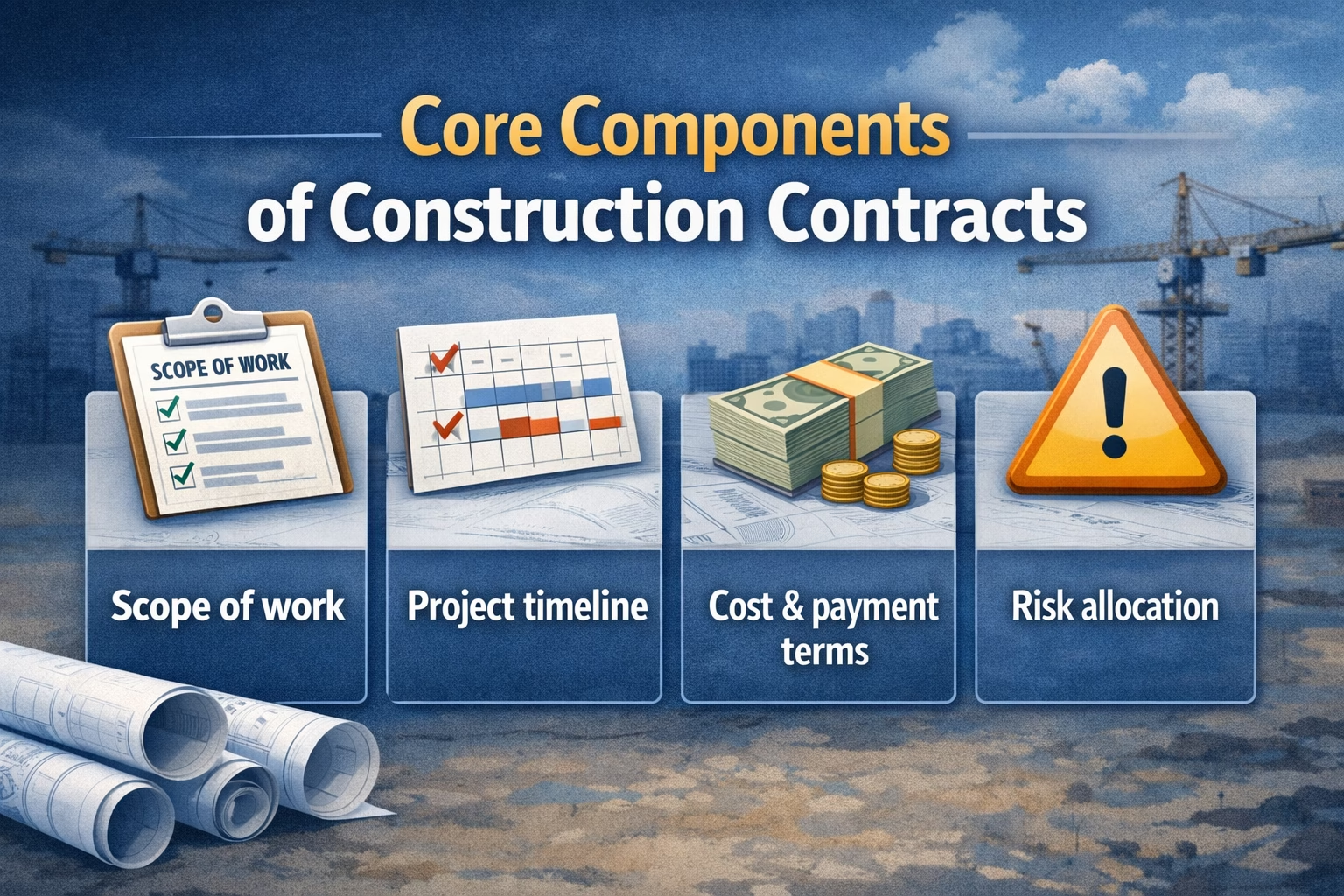
Core Components of Construction Contracts
Every construction contract shares key parts. These parts define duties, limits, and outcomes. When written well, they prevent confusion and protect all parties.
Clear components keep projects organized. They also help teams respond to issues fast. Missing details often lead to delays and disputes.
Scope of work
The scope of work explains what the contractor must deliver. It lists tasks, materials, and quality standards. A clear scope limits guesswork on site.
It also defines what is not included. This prevents surprise claims later. Detailed scopes support fair pricing and smooth execution.
Project timeline
The timeline sets when work starts and ends. It may include key phases and checkpoints. Timelines keep teams focused and accountable.
Clear dates help manage labor and supplies. They also support planning for inspections and approvals.
Cost and payment terms
This section explains how much the project costs. It also explains when payments occur. Payment schedules may follow work progress.
Clear terms protect cash flow for contractors. They also help owners track spending with confidence.
Risk allocation
Risk clauses explain who handles delays or damage. They cover weather, site issues, and design errors. Clear risk rules prevent finger pointing.
Balanced risk sharing supports fair outcomes. It also encourages better planning by all parties.
Dispute resolution clauses
Dispute clauses explain how conflicts get handled. They may require talks before legal action. Early steps often save time and money.
Clear resolution paths reduce stress during conflict. They help keep projects moving even when issues arise.
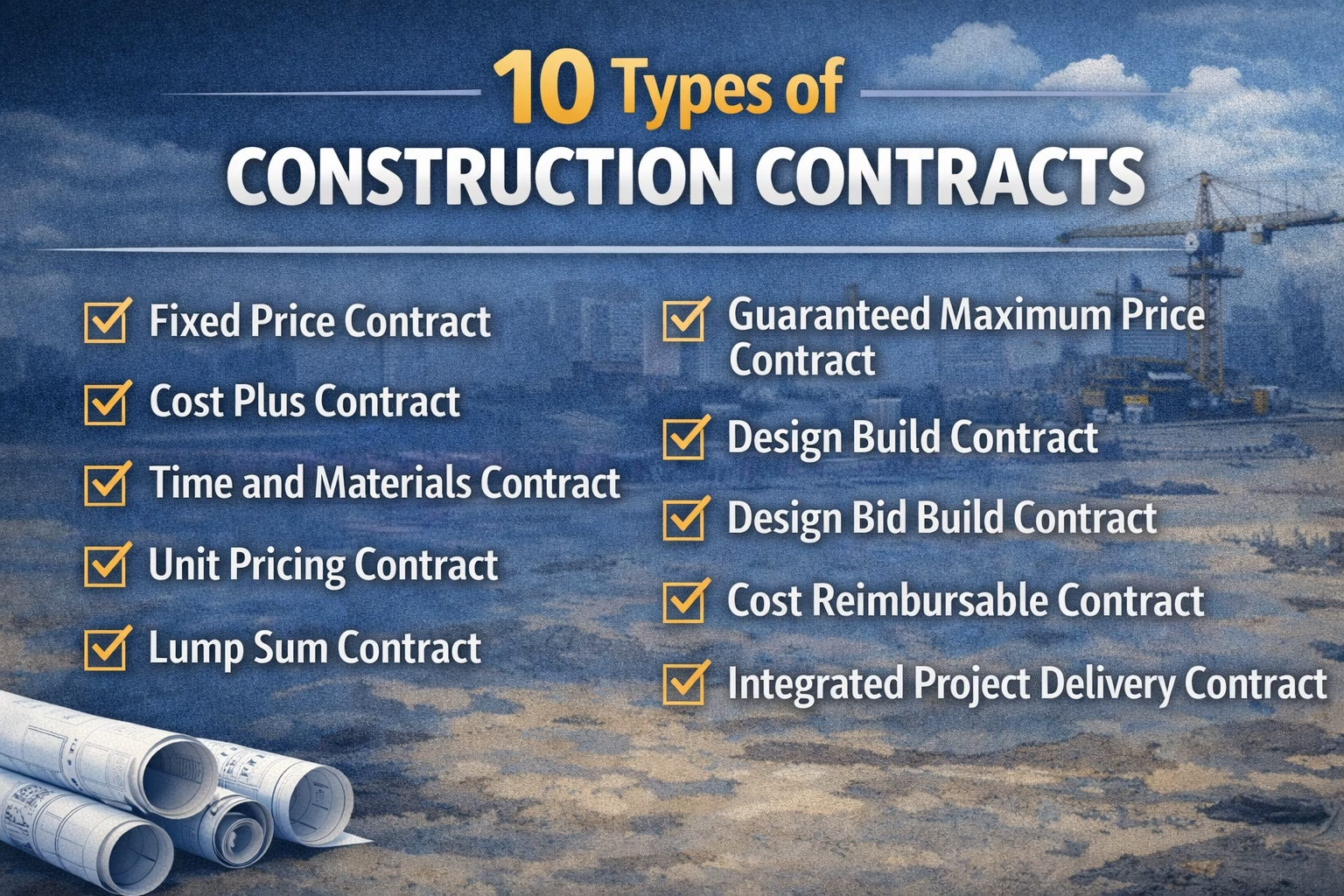
1. Fixed Price Contract
A fixed price contract sets one total cost for the entire project. The contractor agrees to finish the work for that amount. This contract type works best when the scope is clear and stable.
Owners prefer this model for its simplicity. Contractors must plan carefully to protect profit. Any mistake in estimates affects the bottom line.
What is a fixed price contract
In a fixed price contract, the price is agreed before work begins. Labor, materials, and overhead are included in one sum. Changes require formal approval.
The contractor carries most cost risk. Good planning and accurate estimates are critical.
Pros of fixed price contracts
Cost certainty is the biggest benefit. Owners can plan budgets with confidence. Payment tracking stays simple.
This model rewards efficiency. Contractors who manage work well can increase profit.
Cons of fixed price contracts
Unexpected costs reduce contractor profit. Design errors or site surprises cause stress. Poor scope detail increases dispute risk.
Contractors may add higher prices to cover risk. This can raise initial project cost.
Best use cases
Fixed price contracts suit simple projects. They work well with complete designs. Small to medium builds fit this model best.
They are less suitable for changing scopes. Complex projects need more flexible options.
2. Cost Plus Contract
A cost plus contract pays the contractor for actual project costs. The owner also pays an added fee for profit. This contract suits projects with unclear scope or early start needs.
Work can begin before design is complete. Flexibility remains high throughout the project. Strong cost tracking is essential.
Understanding cost plus contracts
Under this contract, the owner covers labor, materials, and approved expenses. The contractor earns a set fee or percentage. All costs must be documented.
Open records are required. Trust and clear reporting support smooth progress.
Advantages
Design changes are easier to manage. Work can start faster. Quality often improves due to less cost pressure.
Contractors focus on doing the job right. Owners gain more control over decisions.
Disadvantages
Final cost is not fixed. Budgets can grow without strict oversight. Owners must review expenses often.
Weak cost control leads to disputes. Clear rules help reduce this risk.
When to choose cost plus
Choose this contract for complex projects. It fits work with many unknowns. It also suits fast track builds.
It works best when trust is strong. Active owner involvement is required.
3. Time and Materials Contract
A time and materials contract pays for labor hours and material costs. Rates are agreed before work starts. This contract offers flexibility when the scope is unclear.
Work can begin quickly. Changes are easy to handle as they arise. Careful cost tracking is essential.
How time and materials contracts work
The owner pays based on hours worked and materials used. Labor rates are fixed. Material costs follow invoices.
Daily or weekly records support billing. Clear logs protect both parties.
Benefits
This contract adapts well to change. It suits short term or urgent work. Owners avoid delays caused by redesign.
Contractors receive payment for all approved effort. Cash flow stays steady.
Risks
Costs can rise without notice. Poor tracking leads to disputes. Owners must monitor progress closely.
Lack of a cost cap increases budget risk. Controls help limit exposure.
Ideal project types
This model suits repair and maintenance work. It fits projects with unknown conditions. Small renovations also benefit.
4. Unit Pricing Contract
A unit pricing contract breaks work into measurable units. Each unit has a set price. The final cost depends on the total units completed.
This contract suits projects where quantities may change. Pricing stays fair as work adjusts. Accurate measurement is critical.
Definition and structure
The contract lists each work item as a unit. Examples include cubic meters of concrete or meters of piping. Payment equals units completed times unit rate.
Rates are agreed before work starts. Quantities are confirmed during construction.
Strengths
This contract handles change well. Owners pay only for work done. Contractors receive fair payment for added quantities.
Pricing stays transparent. Disputes reduce when units are measured clearly.
Weaknesses
Final cost is uncertain at the start. Poor measurement causes conflict. Tracking units takes time and effort.
Estimates may differ from actual quantities. Budgets need flexibility.
Suitable scenarios
Unit pricing fits civil and infrastructure work. Roads, utilities, and earthworks use it often. It works best where quantities vary.
5. Lump Sum Contract
A lump sum contract sets one total price for all project work. The contractor agrees to deliver the full scope for that amount. This contract offers clear cost expectations from the start.
Owners favor this model for budget control. Contractors must plan every detail before pricing.
Key features
The price covers labor, materials, and overhead. The scope must be fully defined. Any change requires a formal adjustment.
Payment usually follows project milestones. Clear terms support smooth billing.
Why owners like it
Owners know the full cost early. Budget planning becomes simple and predictable. Fewer payment calculations are required.
Risk stays mostly with the contractor. Owners face fewer surprise costs.
Contractor concerns
Contractors carry high cost risk. Errors in estimates reduce profit. Unclear scopes increase dispute risk.
Site surprises or design gaps cause pressure. Careful review before signing is essential.
6. Guaranteed Maximum Price Contract
A guaranteed maximum price contract sets a cost limit for the project. The owner pays actual costs up to that limit. The contractor absorbs costs beyond the cap.
This contract balances risk between both parties. It offers cost control with some flexibility.
GMP contract explained
The contract defines a maximum total price. Costs include labor, materials, and approved expenses. A fee covers contractor profit.
Work may begin before full design completion. Ongoing cost tracking is required.
If final costs stay below the cap, savings may be shared. The split is agreed in advance. This rewards cost control and efficiency.
Both parties benefit from smart decisions. Teamwork improves when goals align.
Potential challenges
Accurate cost tracking is critical. Disputes may arise over what costs count. Poor records weaken trust.
Design changes can affect the cap. Clear rules help manage adjustments.
7. Design Build Contract
A design build contract places design and construction under one party. The owner signs a single agreement. This model streamlines decision making.
Communication improves with fewer handoffs. Projects often move faster from start to finish.
Single point responsibility
One team handles both design and construction. Accountability stays clear throughout the project. Issues are resolved internally.
Owners avoid conflicts between designers and builders. Responsibility does not shift.
Faster delivery
Design and construction can overlap. Work starts before design is fully complete. This shortens the overall schedule.
Early coordination reduces rework. Time savings often lower total cost.
Reduced disputes
Fewer parties mean fewer disagreements. Problems are solved within one team. Claims drop in number and impact.
Clear roles support smoother collaboration. Trust builds more easily.
8. Design Bid Build Contract
A design bid build contract follows a traditional project path. Design is completed before construction begins. The owner manages separate agreements.
This method is widely used. It offers strong control over design details.
Traditional project flow
The owner first hires a designer. Plans and drawings are completed. Contractors then submit bids.
Construction starts after a contract award. Each phase stays separate and clear.
Owner control
Owners control the design from start to finish. Changes can be reviewed before bidding. Quality standards are defined early.
Competitive bidding may reduce cost. Owners compare prices with confidence.
Longer timelines
This process takes more time overall. Design must finish before bidding starts. Construction begins later.
Changes during construction cost more. Careful planning helps reduce delays.
9. Cost Reimbursable Contract
A cost reimbursable contract repays the contractor for approved project costs. The owner also pays a set fee. This contract suits projects with many unknowns.
Flexibility remains high during construction. Strong cost control is essential.
How reimbursement works
The owner pays for labor, materials, and direct expenses. The contractor submits detailed records. Only approved costs are reimbursed.
The fee may be fixed or based on cost. Clear rules guide payment.
Transparency needs
Open records are required at all times. Owners must review costs often. Trust supports smooth cooperation.
Clear reporting reduces disputes. Regular audits help maintain control.
Control measures
Cost caps may limit spending. Approval steps control large expenses. Progress reviews track performance.
These measures protect budgets. They also keep projects on course.
10. Integrated Project Delivery Contract
An integrated project delivery contract brings all key parties together. Owners, designers, and builders work under one agreement. This model promotes teamwork from the start.
Goals align early. Decisions focus on project success, not individual gain.
Collaborative approach
All parties plan and build as one team. Information is shared openly. Problems are solved together.
Early input improves design quality. Waste and rework are reduced.
Risk is shared among the team. Rewards depend on overall project results. This encourages smart choices.
Success benefits everyone. Failure affects all parties equally.
Cultural fit requirements
This model requires trust and respect. Teams must value cooperation. Strong leadership supports the process.
Not every team fits this approach. Careful selection is important.
Best Practices for Managing Construction Contracts
Strong contract management keeps projects on track. Clear processes reduce risk and cost. Active oversight supports steady progress.
Contracts should guide daily actions. They should also support fair decisions when issues arise.
Clear documentation
Write contracts in plain language. Define roles, tasks, and limits clearly. Avoid vague terms and assumptions.
Keep all records organized. Written proof supports fast issue resolution.
Regular communication
Hold regular meetings with all parties. Share updates on cost, time, and scope. Address issues early.
Open dialogue builds trust. It also prevents small problems from growing.
Change order control
Document every change in writing. Approve changes before work begins. Track cost and time impact.
Clear control prevents disputes. It also protects budgets and schedules.
Legal review
Have contracts reviewed by legal experts. Small clauses can carry major risk. Early review prevents costly mistakes.
Legal guidance adds protection. It also ensures compliance with local rules.
Common Mistakes to Avoid
Many construction disputes start with simple mistakes. Most can be avoided with careful planning. Awareness helps protect time and money.
Poor contract practices create stress for all parties. Clear choices reduce long term risk.
Vague scopes
Unclear scopes cause confusion on site. Tasks may be missed or repeated. This leads to delays and cost growth.
Define all work in detail. Clear scopes support fair pricing and execution.
Poor risk planning
Ignoring risk invites trouble. Weather, site issues, and supply delays affect projects. Without planning, costs rise fast.
Assign risks clearly in the contract. Preparation limits damage when problems occur.
Ignoring local laws
Local rules affect permits and safety. Ignoring them can stop work. Fines and delays may follow.
Ensure contracts follow local laws. Compliance protects the project and all parties.
Choosing the Right Contract Type
Selecting the right contract sets the tone for the entire project. The wrong choice increases risk and cost. The right choice supports control and teamwork.
Each project has unique needs. Contract selection should reflect those needs.
Project size and complexity
Large projects involve many trades and risks. They need flexible contracts. Smaller projects benefit from simple agreements.
Complex work often requires shared risk. Simple work favors fixed pricing.
Budget certainty
Some owners need firm cost limits. Fixed price contracts support this goal. They reduce budget surprises.
Other projects allow cost movement. Flexible contracts suit those cases.
Risk tolerance
Decide who should carry risk. Owners may prefer to share it. Contractors may price risk into bids.
Choose a contract that matches comfort level. Balanced risk leads to better outcomes.
Conclusion
Construction contracts guide every stage of a project. They define roles, costs, and timelines. Clear contracts reduce risk and support smooth delivery.
Each contract type serves a different need. The right choice depends on scope, budget, and risk tolerance. Thoughtful selection prevents disputes and delays.
Strong contract management is just as important as contract choice. Clear communication and proper controls protect all parties. Success depends on discipline and clarity.
For reliable results and expert guidance, partner with Nyolenju Structures Limited. Our team understands contracts and project delivery. Contact Us today and build with confidence.
FAQs
What is the most common construction contract type
Fixed price contracts are widely used for clear scope projects.
Which contract offers the most flexibility
Time and materials contracts allow easy changes.
Are design build contracts risky for owners
They reduce disputes but limit design control.
How do I reduce disputes in construction contracts
Use clear scopes and strong communication.
Who should review construction contracts
Always involve legal and construction experts.